Stone guide · stones, plainly
Learn about lab-grown diamond
Diamond grown above ground, graded and disclosed like any other.
- The facts
- Stone facts
- Mineral family
- Carbon (diamond)
- Hardness
- 10 / 10 Mohs
- Birthstone
- Apr.
- Anniversary
- 60th
The mineral
Carbon, arranged the hard way. Nothing natural is harder, and nothing returns light quite like it.
In the hand
At 10 / 10 on the Mohs scale it is heirloom-hard: wear it every day for a lifetime and let the metal show the years instead.
Treatment, plainly
Grown above ground with the same chemistry as its mined counterpart. The passport says lab-grown in those words, and the price says it too.
Choosing one
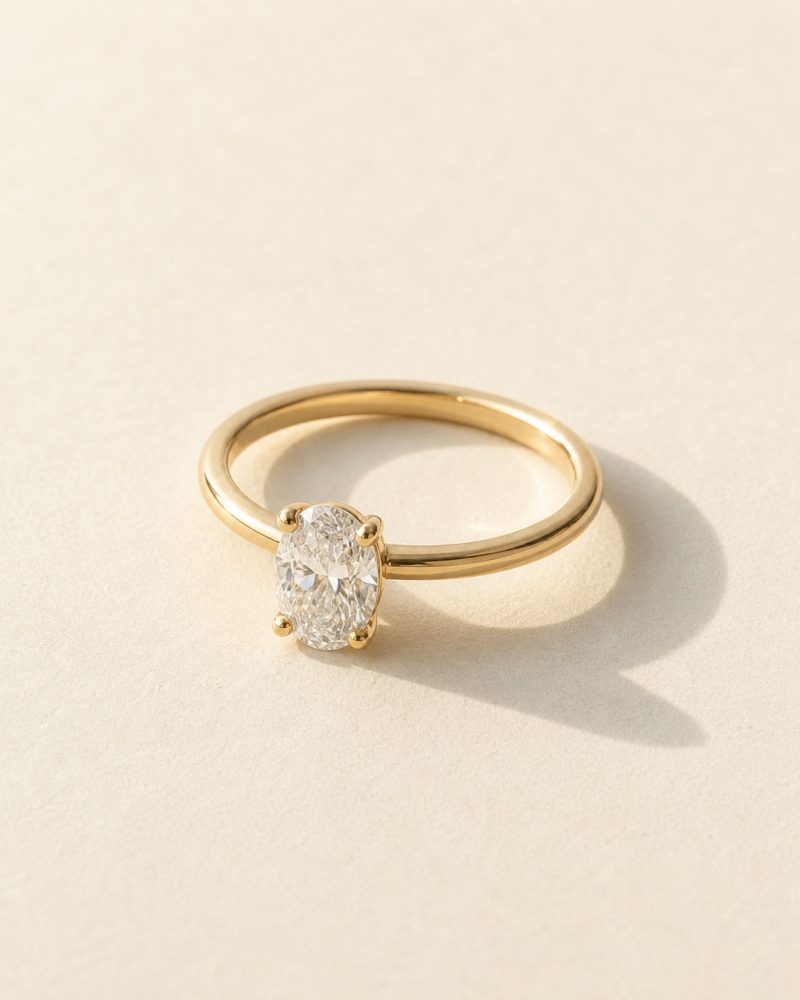
Photographs flatter and light booths lie. We choose lab-grown diamond in north daylight, loose, against ivory paper, and we would rather show you two honest stones than twenty pretty pictures. Diamond grown above ground, graded and disclosed like any other.
Care
Warm water, a drop of dish soap, a soft brush. Store it in its own pouch; it will scratch softer stones sooner than they scratch it.
Asked about lab-grown diamond
Is lab-grown diamond right for daily wear?
At 10 / 10 on the Mohs scale it is heirloom-hard: wear it every day for a lifetime and let the metal show the years instead.
Is it treated?
Grown above ground with the same chemistry as its mined counterpart. The passport says lab-grown in those words, and the price says it too.
What does it cost here?
Current works with this stone start at From $4,200. Every piece is one of a kind, so prices move with the stone, never with a formula.
How do I know what I am buying?
Every stone that leaves the studio carries a passport: species, carat, cut, origin as far as it is knowable, and treatment in full words. If a lab has seen it, the certificate number is on the passport.
Current works & prices