A short history
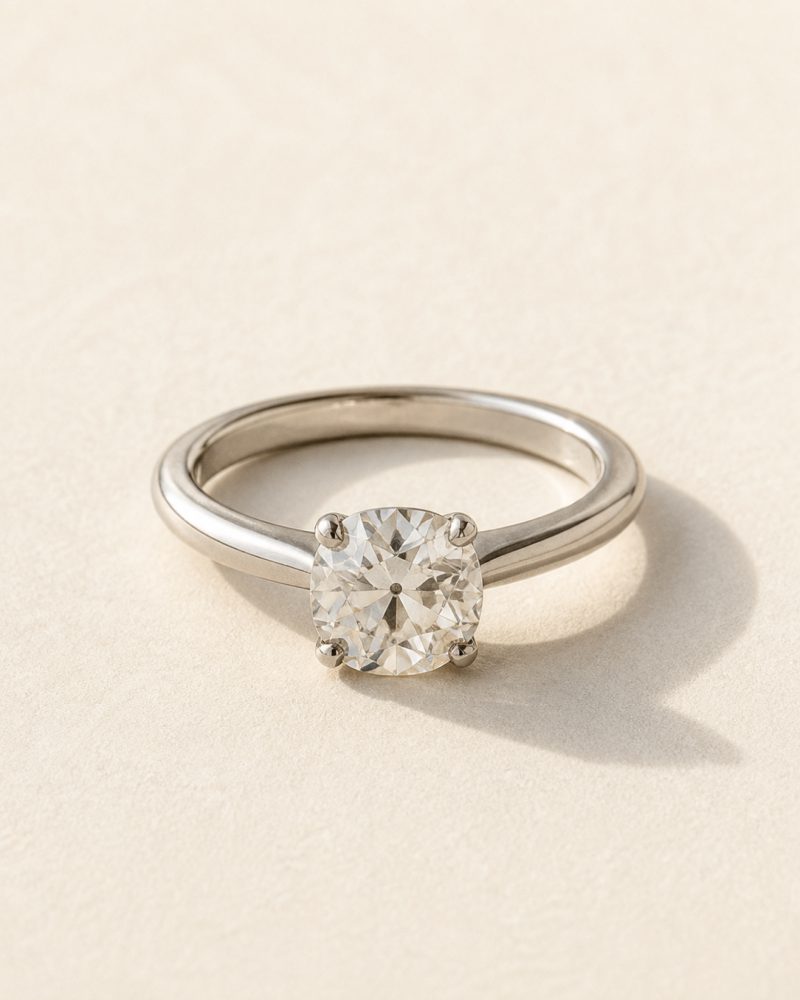
Cut by hand before electricity: small table, high crown, open culet. Each one is slightly asymmetric because a person, not a laser, made it.
DIAMOND SHAPE
Cut by hand before electricity: small table, high crown, open culet. Each one is slightly asymmetric because a person, not a laser, made it.
Chunky, slow flashes rather than glitter. In candlelight nothing modern touches it. Each stone’s quirks are named on its passport, because they are the point.
Hand engraved mounts, milgrain edges, warm gold. Putting an antique cut in a modern mount is legal, but we will argue.
We buy 1.00 to 1.15. Outside that window the shape starts reading as a different cut, or worse, as a mistake. The passport lists exact millimeter dimensions so you can check our judgment.
58 hand cut. More facets mean more sparkle but smaller flashes; fewer mean bolder, slower light. Neither is better; they are different personalities.
Fancy shapes like this cost less per carat than rounds, because less rough is lost and fewer buyers compete for them. Same material, better math.
Both, cut to the same standard. Lab rough makes larger antique stones attainable; the passport names the origin either way, in the same type size as everything else.
OTHER SHAPES