A short history
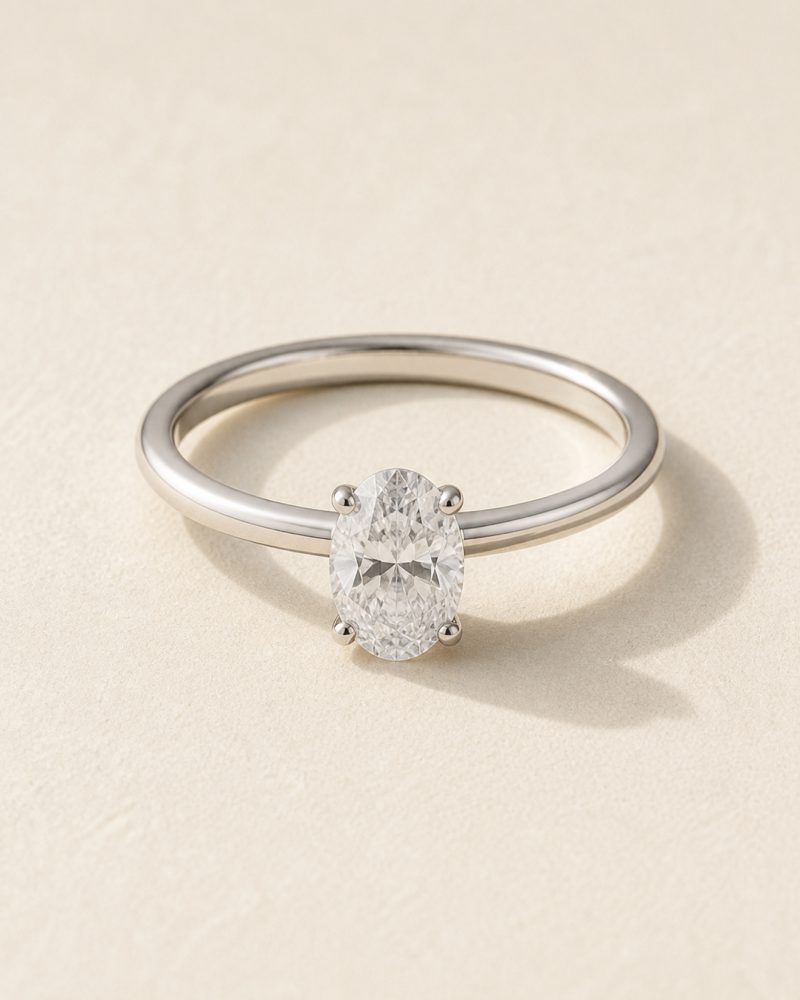
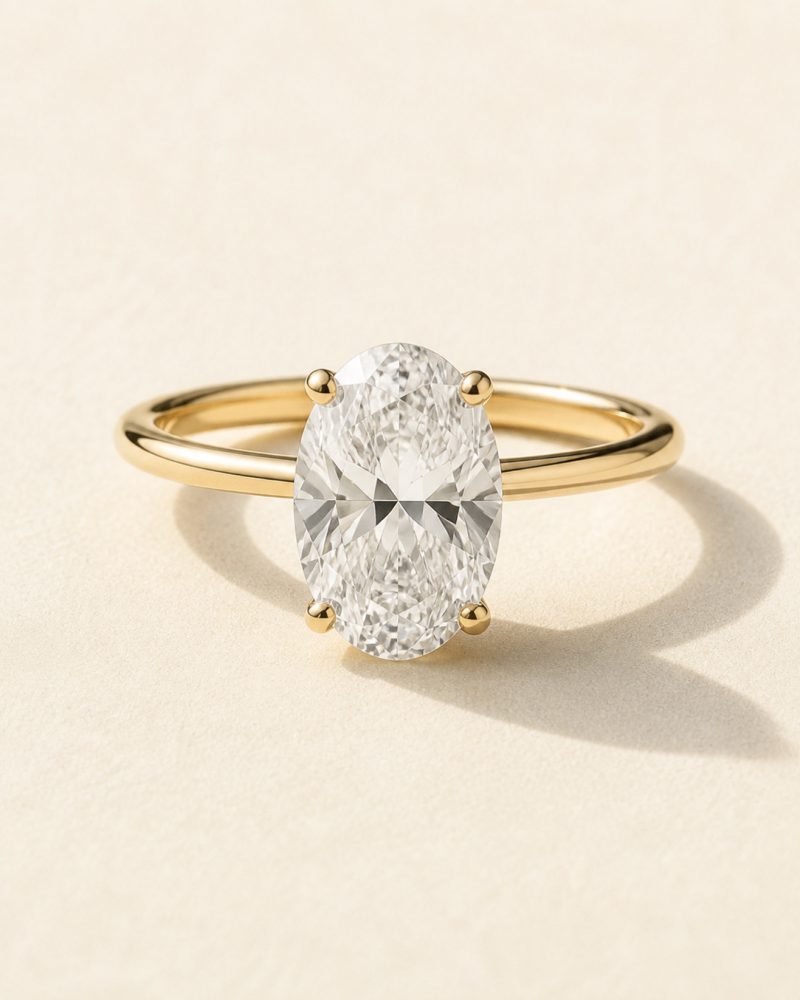
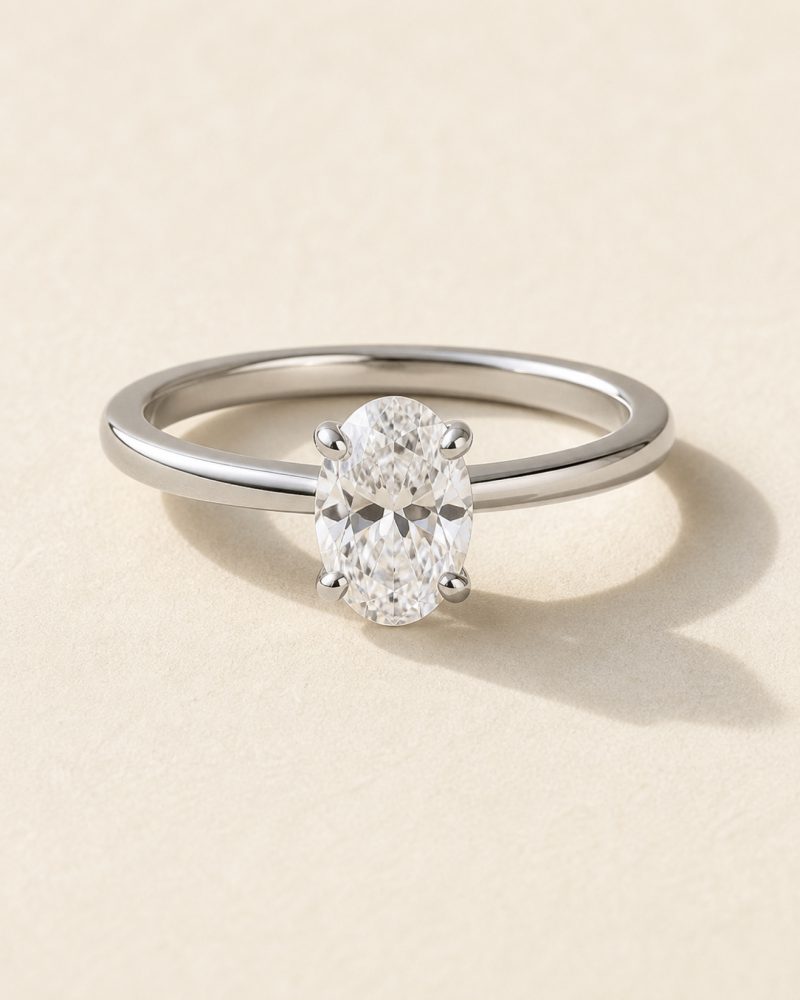
The modern oval was standardized in the late 1950s as a round stretched without losing brilliance. It has spent the last decade as the most requested engagement shape at this bench.
DIAMOND SHAPE
The modern oval was standardized in the late 1950s as a round stretched without losing brilliance. It has spent the last decade as the most requested engagement shape at this bench.
Wears larger than its weight and lengthens the finger. Watch for the bow tie, the dark band across the middle of a badly cut oval; ours are bought specifically to avoid it.
Four or six prongs, or east west for a modern turn. Ovals carry a low profile well, which suits hands that type.
We buy 1.35 to 1.50. Outside that window the shape starts reading as a different cut, or worse, as a mistake. The passport lists exact millimeter dimensions so you can check our judgment.
57 or 58. More facets mean more sparkle but smaller flashes; fewer mean bolder, slower light. Neither is better; they are different personalities.
Fancy shapes like this cost less per carat than rounds, because less rough is lost and fewer buyers compete for them. Same material, better math.
Both, cut to the same standard. Lab rough makes larger oval stones attainable; the passport names the origin either way, in the same type size as everything else.
OTHER SHAPES